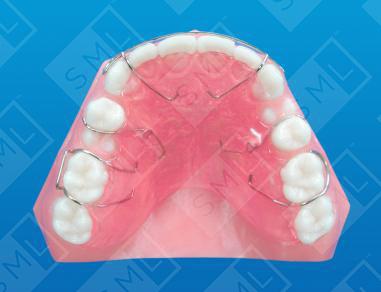
Abnormal exfoliation and eruption patterns can cause erupting teeth to be blocked out of the arch form. When the overall arch length is sufficient, an appliance like the one shown here is ideal to move the bicuspids, allowing the submerged teeth to erupt. This example also illustrates the proper use and placement of the retention components needed for this active appliance. Note that the labial arch wire used here is of the “Reverse Hawley” design. This affords cuspid support without having cross-over wires distal to the cuspids. As a result, the right bicuspid can be moved into complete contact with the cuspid. Likewise, a “C” clasp (possibly used in conjunction with a composite ledge) is used on the left first molar to permit complete distalization of the left second bicuspid. These are all critical design considerations in this particularly treatment scenario.