


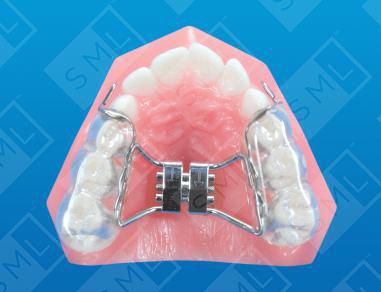


Face Mask Therapy can be used to treat patients who have a mid-face insufficiency, mandibular prognathism, maxillary hypoplasia, clefts, and/or tongue problems. Although the Bonded Maxillary Face Mask/Expansion Appliance is -- within the context of facial mask therapy -- very similar to a bonded rapid maxillary expansion appliance, the expansion effect of this appliance is quite different. Simply put, it disrupts the maxillary sutural system and enhances the effect of the orthopedic facial mask by making sutural adjustments occur more readily.
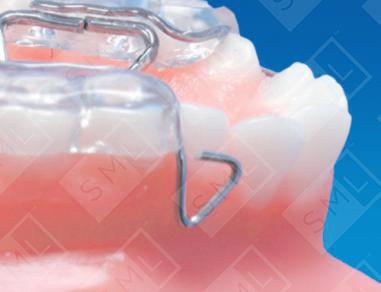
Midfacial orthopedic expansion has also been shown to be beneficial in the treatment of Class III malocclusions. Rapid palatal expansion can produce a forward movement of "Point A" with a slightly downward and forward movement of the maxilla. In the mixed detention, the bonded occlusal part of this appliance usually covers the first and second deciduous molars and the permanent first molars. The hooks for the elastics are placed in the anterior aspect of the appliance -- in the region of the upper first deciduous molars.In cases where only the deciduous detention is present, the splint typically covers the cuspids and the deciduous molars. In this instance, the hooks for the elastics are placed adjacent to the upper cuspids. In late mixed or early permanent dentition cases, the occlusal coverage portion of the appliance may require the following modifications:
If permanent second molars are erupted, it is necessary to place occlusal rests against these teeth to prevent them from erupting during appliance wear. The framework itself does not extend to the second molars because of the danger of opening the bite due to placement of acrylic on the occlusal surface of the upper second molars.
In all cases, the occlusal acrylic can be finished with either a flat occlusal surface or with light general indexing of the lower posteriors. Many doctors prefer the light indexing, as it is believed to make mastication easier. Please indicate your preference when ordering.