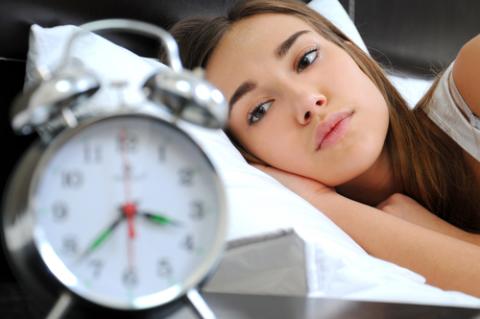
Could Your Dentist Be Your Sleep Apnea Hero?

Sleep apnea is more common than you might imagine. According to SleepDisordersGuide.com, it may affect up to 1 in 15 Americans. That adds up to millions of people who struggle to get a good night’s sleep and often suffer negative health consequences as a result. According to SleepApnea.org, sleep apnea may contribute to: high blood pressure, heart disease, stroke, diabetes, depression, and more.

If you have sleep apnea, your first visit is likely to be to your family physician who might prescribe a CPAP Assistance Program. The CPAP can be very helpful, but it isn’t right for everyone. Some people just can’t get used to the mask or the flow of air through the machine. In this case, your dentist may be the sleep apnea solution you are looking for. 

  Read More

Location

United States
40° 45' 21.7368" N, 94° 49' 25.266" W

When to Recommend an Interim Appliance to an Elderly Patient

Interim Dental AppliancesIs it always the best option to recommend permanent restorations and bridges to elderly patients? Many dentists and cosmetic dentists would tend to answer “yes,” but today’s practitioner needs to carefully consider the best interests of the patient.

Not every elderly patient will do well with the lengthy and sometimes grueling appointments required to perform permanent restoration. This is especially true if the patient is already suffering from health-related issues and might not be highly compliant. In these cases, a dentist may want to consider the application of much simpler interim appliances, which can preserve both aesthetics and function.

Also worthy of consideration is the fact that many seniors are on a fixed income.  They may not be able to afford extensive dental interventions. Here, too, less expensive interim appliances can provide a more preferable, useful solution, at least in the short term. 

  Read More

Location

United States
40° 45' 21.7368" N, 94° 49' 25.266" W

Not Your Parents’ Retainer

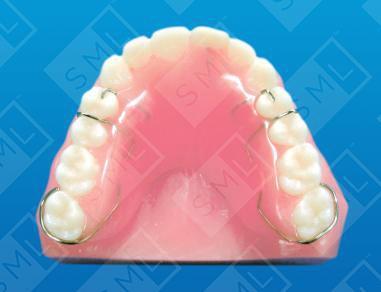
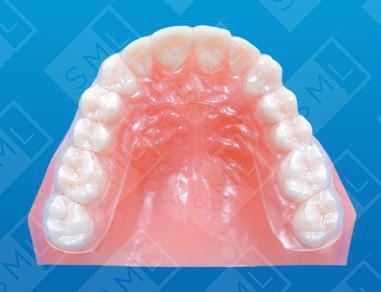
Hawley RetainerOnce the braces come off, you’re in the final stretch in the race to straight teeth. At this stage, you’ll need a final retainer… most likely, a Hawley Retainer. Chances are, if you’ve spent the last few years with brackets on your teeth, the last thing you want is to walk around school or work with a big metal wire across your teeth….but you’re in luck.

Retainers, like braces, are changing with the times. Today, you can choose clear braces, which are a lot less intrusive. Likewise, the standard Hawley Retainer has also gotten an upgrade. You can now order one with a clear wire, known as ASTICS. This makes the retainer a lot less noticeable – good news for both teens and adults.

Ask your orthodontist about Hawley Retainer options today.


  Read More

Location

United States
40° 45' 21.7368" N, 94° 49' 25.266" W

Does Your Jaw Hurt In The Morning? Nocturnal Grinding Could Be to Blame

Rick-N-NatorDo you wake up with severe TMJ pain, sore teeth, or a pounding headache in the morning? No, your spouse isn’t kickboxing in their sleep…well, probably not. It’s more likely that you’re grinding your teeth.

Nocturnal grinding is a common habit. Hard to know just how common it is because so many people have absolutely no idea that they’re doing it. The best way to find out if you are grinding your teeth? Ask your bed partner if they’ve ever heard you doing it. It’s likely you’re a grinder if you experience bad headaches in the morning, prolonged tooth sensitivity or regular jaw pain.

If you have these symptoms, make an appointment with your dentist. A dentist can order a custom mouth guard that to protect your teeth from the painful effects of nocturnal grinding. 

  Read More

Location

United States
40° 45' 21.7368" N, 94° 49' 25.266" W

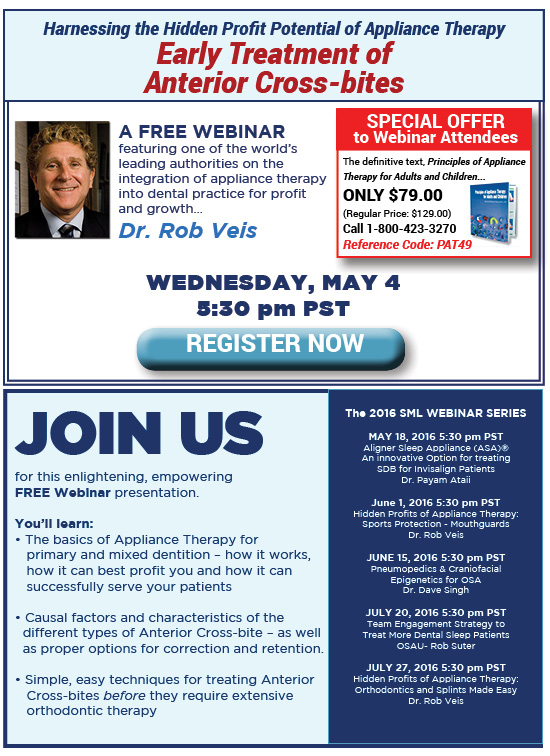
Early Treatment of Anterior Cross-bites Free Webinar

 A Free Webinar on harnessing the hidden profit potential of  dental appliance therapy.  Learn about the Early Treatment of Anterior Cross-bites.


Visit us at: 

CDA - Booth #1234
AAPD - Booth #401
AADSM - Booth #205

Location

United States
40° 45' 21.7368" N, 94° 49' 25.266" W

Can a Few Tennis Balls Stop Your Snoring?

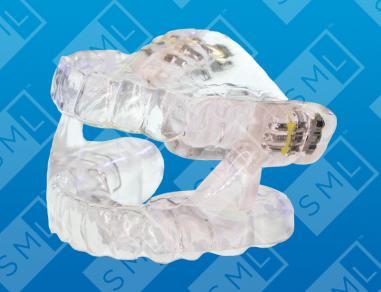
Sleep Dental AppliancesSleep is a precious thing, which is why it can be so frustrating when your bed partner hits you in the face with a pillow and tells you to stop snoring. There are plenty of fancy gadgets on the market to help with this problem, including dental appliances for snoring, but before you shell out a lot of money for one of those, why not try tennis balls?

In an article for the Huffington Post, sleep medicine specialist Dr. Dianne Augelli explains that most snoring occurs when an individual sleeps on their back. She suggests a quick home remedy. Sew a pocket into the back of your shirt and put three tennis balls inside. During the night, when you flip onto your back, those tennis balls will remind you to shift over to your side. 

Of course, if your snoring is a result of a serious condition like sleep apnea, then you should probably speak to your doctor about getting a CPAP machine (Continuous Positive Airway Pressure…or one of many  available custom-made dental appliances for snoring. You’ll sleep better.


  Read More

Location

United States
40° 45' 21.7368" N, 94° 49' 25.266" W

The Three Biggest Mistakes Kids Make With Their Retainers

RetainerThe braces are off. Your teeth are straight, your smile is awesome and you’re in the home stretch! Next step? Your orthodontist fits you with a final retainer – one that will help keep your teeth in proper place and position.

Location

United States
40° 45' 21.7368" N, 94° 49' 25.266" W

How Do You Know If You Have Sleep Apnea?

Sleep Apnea and Snoring ProblemDo you feel exhausted every morning? Headaches when you wake up? Do you find yourself suddenly awake and gasping for air in the middle of the night? You may suffer from a very common condition known as sleep apnea, where your airway becomes blocked as you sleep. As a result, you may wake up hundreds of times in a single night (often without remembering), which disrupts your sleep cycle and can cause all sorts of health problems.

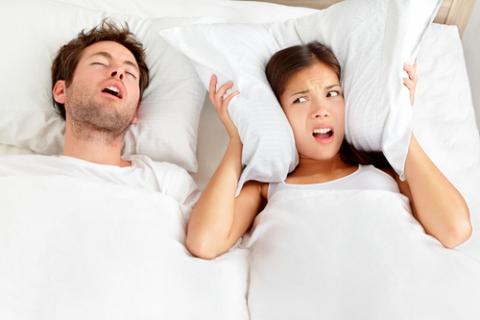
If you cozy up with a partner at night, it will be easy to tell if you have sleep apnea. Your loving partner will probably spend the whole night hitting you with a pillow, begging you to stop snoring so loudly. But what about if you haven’t found that special man or woman yet?

Some telltale signs: Abrupt awakenings in the night

  • Exhaustion upon waking up
  • Headaches in the morning
  • Acid Reflux
  • Difficulty staying awake during the work day

  Read More

Location

United States
40° 45' 21.7368" N, 94° 49' 25.266" W

Survey Says: Most of Us Aren’t Happy With Our Smile

Beautiful TeethA few years ago, media website She Knows published an article about the link between a healthy smile and high self-esteem. At the end of the article, readers were offered a simple survey. It only had one question, “Are you happy with your smile?”

Over 1,400 readers answered, and the results might surprise you. If you’re unhappy with your crooked teeth, yellow teeth, or deep overbite, then you aren’t alone. Seventy percent of the survey’s respondents are not happy with their smile.

  Read More

Location

United States
40° 45' 21.7368" N, 94° 49' 25.266" W

Why Is Your Dentist Recommending a Space Maintainer?

Space Maintainers for your TeethRecently lost one of your back teeth? A molar? You may not feel that there’s any reason to replace the tooth, since the gap isn’t noticeable to anyone except your dentist. You would be wrong.

Your teeth never stop moving. If you lose a molar, that creates an open space in your mouth – a space that neighboring teeth will eventually move to fill.  This movement can change the shape of your bite; change the way you chew, speak and breathe; result in misalignment, clenching, grinding, crooked smile, jaw pain and a host of other problems.

That’s where a space maintainer comes in (or goes in, actually).

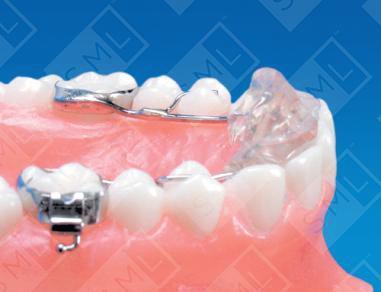
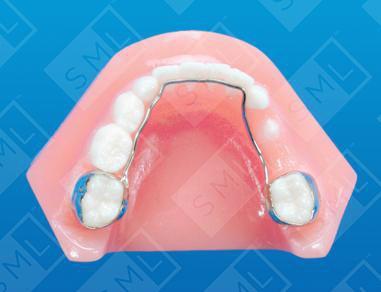
Space maintainers are oral appliances that help maintain the lost tooth space between your teeth. Typical treatment involves your dentist placing a bracket around one tooth. The bracket has bars which extend across the lost-tooth gap and rest against the next tooth. The bars keep the teeth from moving toward one another. Sound simple? It is.

If you’ve recently lost a tooth, ask your dentist about a space maintainer -- and whether it’s a good idea for you. 

  Read More

Location

United States
40° 45' 21.7368" N, 94° 49' 25.266" W

Pages