Opening an Orthodontic Office – Should You Manufacture Your Own Appliances?

Orthodontic Appliance LabsOpening your own orthodontic office? Congratulations! What an exciting time for you. Starting an office takes a lot of hard work, and your head is probably spinning with all the things you have to do -- from ordering computers to hiring your very first employees. You have a lot of big decisions to make.

One of the most important?  Whether or not you should manufacture appliances in your office.

Of course there are both benefits and drawbacks to manufacturing your own appliances. On the one hand, you’ll be able to keep a closer eye on the manufacturing process. You’ll (hopefully) improve appliance delivery time and satisfaction. On the other hand, you will likely have to hire a specialist to oversee the lab…and cover the cost for all the materials and equipment. You’ll also need to find an office with sufficient space for accommodating a dental appliance lab.

  Read More

Location

United States
40° 45' 21.7368" N, 94° 49' 25.266" W

The Importance of Stents for Oral Surgeons

Surgical StentsOral surgeons recognize that stents can be used in a variety of ways to help them successfully treat their patients. Stents are often considered a CT appliance, because they can be used in conjunction with a CAT scan during a surgical procedure to help a surgeon properly place an implant.

Surgeons also rely on clear acrylic stents for use during a surgery or a CAT scan procedure. What’s more, CT stents can help to stabilize a patient after surgery as well as protect implant sites. Surgeons often use a CT appliance to protect open wounds from infection and to control bleeding.

At SML (Space Maintainers Laboratories), the expert dental labs in our network can manufacture a variety of CT stents and CT appliances perfect fit for your needs. Not sure which option to choose? They can also guide you in the correct stent selection. Contact us today to learn more. 

  Read More

Location

United States
40° 45' 21.7368" N, 94° 49' 25.266" W

Harnessing the Hidden Profit Potential of Appliance Therapy - Part 1

A FREE WEBINAR featuring one of the worlds leading authorities on the integration of appliance therapy into dental practice for profit and growth…
 
 Dr. Rob Veis


 WEDNESDAY, FEBRUARY 17,  5:30 pm PST

                 Register
 
Join us for this first in a series of enlightening, empowering FREE Webinarpresentations for the upcoming year.

(See Schedule for future dates, topics and times.)

You’ll learn:
 
• The basics of Appliance Therapy - what it is, how it works, and how it can best profit you and serve your patients.

• Simple, easy minor tooth movment techniques for providing your patient with the smile they want and deserve

• The power and simplicity of the Inman Aligner - an ideal "gateway" solution for ensuring appliance therapy success
  Read More

Location

United States
40° 45' 21.7368" N, 94° 49' 25.266" W

Teach Your Child to Care For Their Retainer

How to Clean a RetainerWhen the braces finally come off, your orthodontist will fit your child for a retainer -- a removable device that helps the teeth maintain their final straightened position. It is important for parents to teach their children to take responsibility for their retainers, and that includes cleaning them of bacteria and other unpleasant gunk.

Wash the retainer in water and scrub it with a soft-bristled toothbrush. You can use toothpaste or dish soap or even denture cleaner – all will work just fine. Make sure your child cleans all around the retainer, including wire areas. Then wash it thoroughly with water again to get all the soap/cleanser off. NEVER boil or bleach the retainer – it may warp the plastic.

Cleaning retainers isn’t as glamorous as a mouth full of straight, shiny teeth, but it is necessary for achieving that beautiful smile. 

  Read More

Location

United States
40° 45' 21.7368" N, 94° 49' 25.266" W

What Leads to an Open Bite Tendency?

  ORDER NOW Twin Block to Close an Anterior Open BiteOpen Bite Tendency is a condition that is all too familiar to today’s  practicing orthodontist. Depending on severity of the open bite, a variety of factors may be involved, and some instances of open bite tendency may require extensive correction.

How does an open bite tendency occur? First, certain patients have a genetic predisposition to an open bite. This may be caused by an oversized tongue that presses out against the teeth or an abnormal skeletal growth pattern of the maxilla and mandible. There isn’t a lot that orthodontists can do in the face of hereditary factors.

  Read More

Location

United States
40° 45' 21.7368" N, 94° 49' 25.266" W

A Quick Follow-Up May Increase Appliance Retention in Children

Kids and BracesAs rewarding as it can be to successfully treat children for dental and orthodontic issues, said children aren’t always the most cooperative patients -- especially when it comes to continue proper use of their oral appliances. Retainers get lost, neglected, broken, or simply not worn.

As a dentist or orthodontist, you can’t realistically police your young patients to make sure they follow all of your instructions to the letter, but there are things you can do to increase appliance retention. One simple and easy method? Give your patient (or their parents) a call a week after fitting them with the appliance. Ask if the child is wearing their appliance according to your instructions, remind them of how to clean the appliance, and ask if there are any challenges or issues. Oftentimes, this simple reminder can be just the incentive your patient needs to stay on track.   Read More

Location

United States
40° 45' 21.7368" N, 94° 49' 25.266" W

The Sleep Education Consortium is pleased to present the Annual Sleep Education Consortium Conference

Sleep DentistryThe Growing Role of the Dentist in Sleep Disorders Medicine: Integrating the Dentist into the Medical Treatment Team
 

April 15 & 16, 2016 at the Denton A. Cooley, MD and Ralph C. Cooley, DDS University Life Center, 7440 Cambridge Street, Houston, TX 77054

Gain the knowledge you need to address your patient's sleep concerns in a two day comprehensive course tailored to provide Dental Professionals with the essentials to build their dental practice in this evolving area of dentistry.

This conference architects the growing link between dentistry and sleep medicine, and it will become clear how the dentist can play a larger role in the overall health of patients.
The Houston, Sleep Education Consortium presents a unique opportunity to learn about the dentists' role in sleep disorders treatment (we don't just treat "a" disorder).

  Read More

Location

United States
40° 45' 21.7368" N, 94° 49' 25.266" W

Presenting... THE KEROPIAN O₂ SOLUTION

Technology is changing the world.

Now you can take part in that change – and we're not just talking about sleep apnea and snoring. You have an opportunity to provide revolutionary total health solutions for your patients... and by so doing to significantly increase your own expertise and the profitability of your dental practice.

Presenting...THE KEROPIAN O₂ SOLUTION

A HANDS-ON SLEEP & TMJ SEMINAR
featuring the Full Breath Solution
and the new Full Breath O2

Research shows that 8 of the top 10 listed causes of death by the CDC are directly effected by low levels of oxygen (hypoxemia).  Read More

Location

United States
40° 45' 21.7368" N, 94° 49' 25.266" W

When to Consider Tooth Extraction for Your Child

Teeth CrowdingIt’s always exciting when your child’s first tooth falls out. They get to tuck it under their pillow…and (hopefully) the tooth fairy visits in the dead of night. Typically, as adult teeth begin to erupt, they absorb the root of the baby tooth. This causes the tooth to become loose and eventually fall out. Problems may occur when the permanent teeth do not absorb the root of the baby teeth.

It isn’t uncommon for parents to notice that adult teeth are growing in behind their child’s baby teeth. This condition is formally known as “lingually erupting mandibular incisors” -- more commonly “shark teeth.”

In some cases, the baby teeth will eventually come out on their own. If this doesn’t happen, parents should consider a visit to the dentist for a tooth extraction. If the baby teeth stay in too long, adult teeth will not be able to move into place. This can result in a condition known as “crowding ” -- and the possibility of lasting bite problems (“malocclusion”). With crowded baby teeth out of the way, adult teeth should naturally shift comfortably into the proper aligned position.


  Read More

Location

United States
40° 45' 21.7368" N, 94° 49' 25.266" W

Removable Braces Get Rid of Some of the Biggest Downsides to Normal Braces

For a long time, traditional metal braces were a big pain, but they were also the only option if you wanted to straighten your teeth. Those subjected to braces were forced to endure pinching and Orthodontic Appliancescutting and a restricted metal-smile lifestyle for years. They couldn’t eat hard foods (like carrots) for fear of breaking brackets, and brushing and flossing took forever!
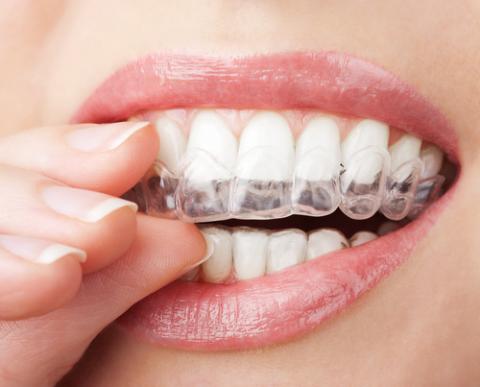
Now, you don’t have to suffer through those daily inconveniences. When you visit your orthodontist, he or she can tell you all about removable braces – clear aligners like Invisalign®. The Invisalign® system is a series of removable, clear acrylic trays that you wear over your teeth. The trays gently move your teeth into a straighter position. Not only are the clear trays nearly invisible (hence the name), but you can remove them before sitting down to eat or brushing your teeth.

Invisalign® removable braces are not right for everyone, and they tend to be more expensive than traditional braces. Ask your orthodontist today to learn if you are a good candidate for removable braces, clear aligners, or Invisalign®.

  Read More

Location

United States
40° 45' 21.7368" N, 94° 49' 25.266" W

Pages